Skip to content
Pool Fence Installation in Kansas City

Pool Fence Installation in Kansas City

Every pool fence RKC installs passes the first inspection — code-compliant by specification, not by accident. RKC is the Kansas City fence contractor that knows the pool code in every KC metro city — 48-inch minimum height, 4-inch maximum picket spacing (pickets AND ground clearance), self-closing self-latching gates with latch at 54+ inches. Every post set 36 inches deep in concrete. Every permit pulled and inspection scheduled before the first panel ships.

★★★★★
4.9
from 77+ reviews
Licensed
& Insured · KS + MO
400+
fences installed
A+ BBB Rated Licensed KS + MO First-Inspection Pass Rate Inspection Coordination Included
Browse fence styles in our catalog ↓
Why KC pool owners pick RKC

The Pool Fence That Doesn't Feel Like a Cage

A pool fence should do two things: pass inspection, and still let the pool look like a pool. Specified to KC pool code from the start — height, spacing, self-latching gates, and finish that stands up to chlorine — it clears the permit and disappears into the backyard you actually wanted.

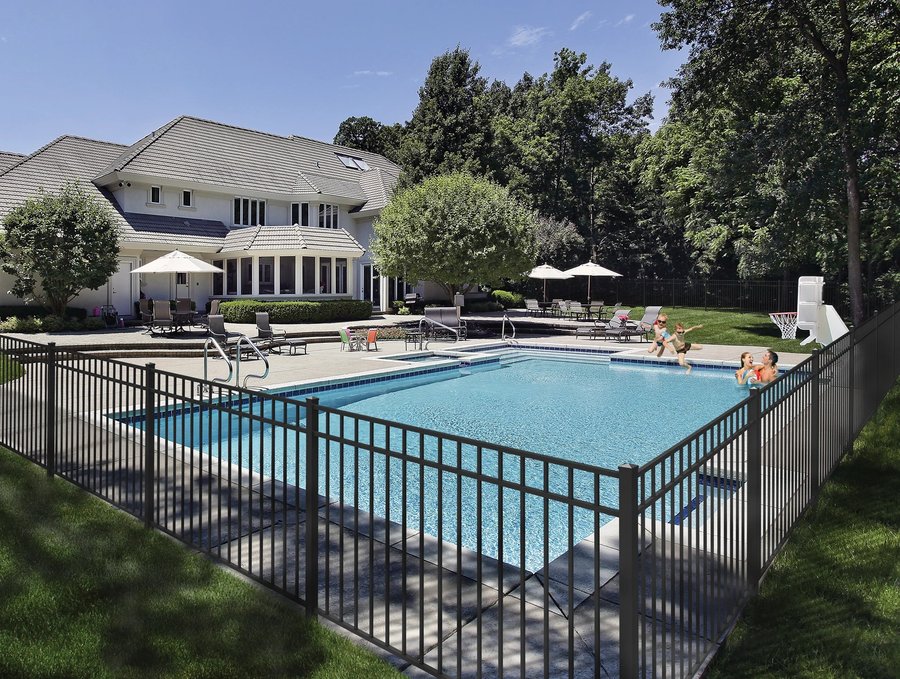
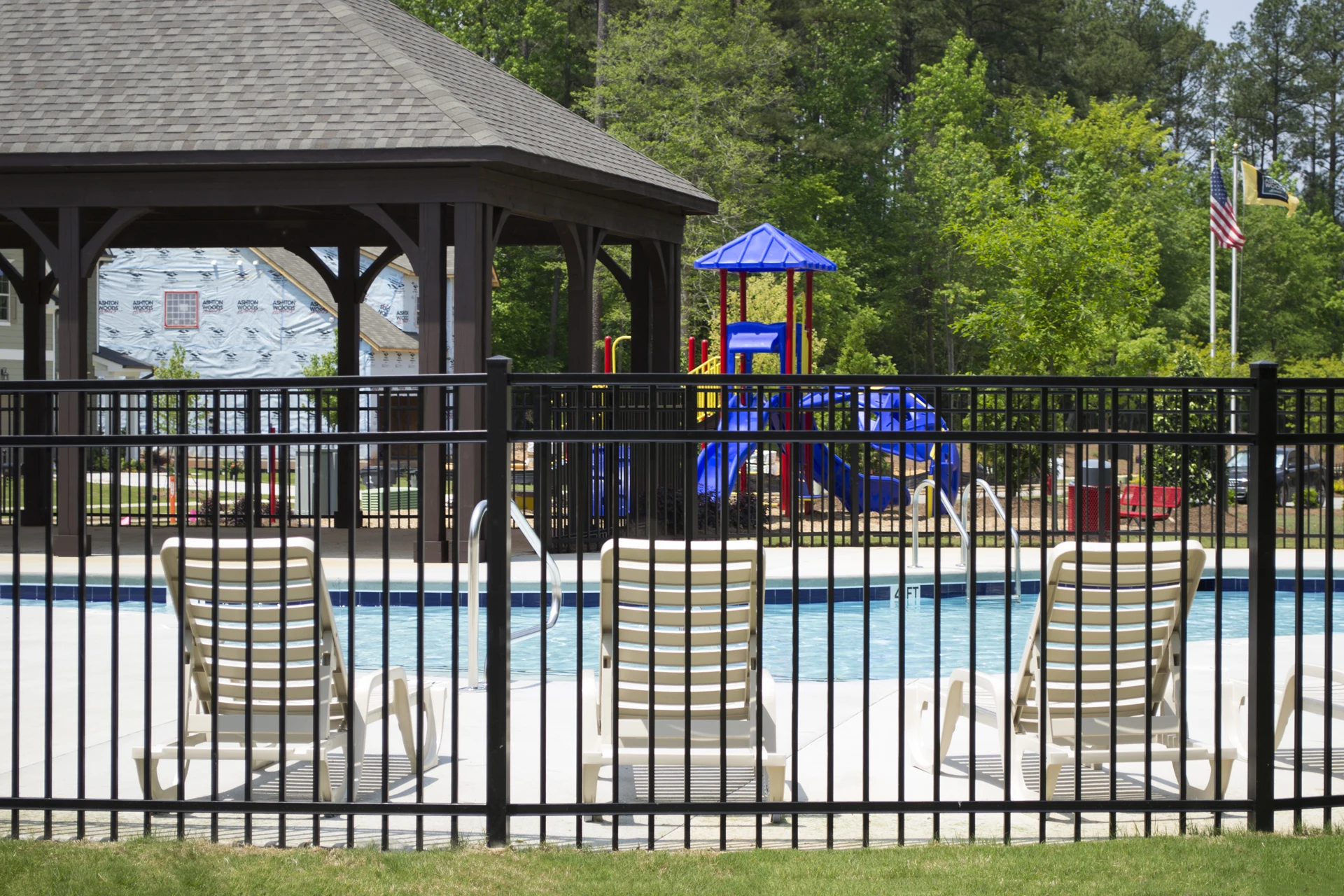
Kids swimming safely behind a code-compliant pool fence in the Kansas City metro

Letting the kids swim without standing on the deck

Self-closing, self-latching gates mean you can step inside for towels or grab a drink on the patio without wondering whether the gate drifted open behind you. The fence does the watching so you don't have to sit at the edge of the water for every cannonball.
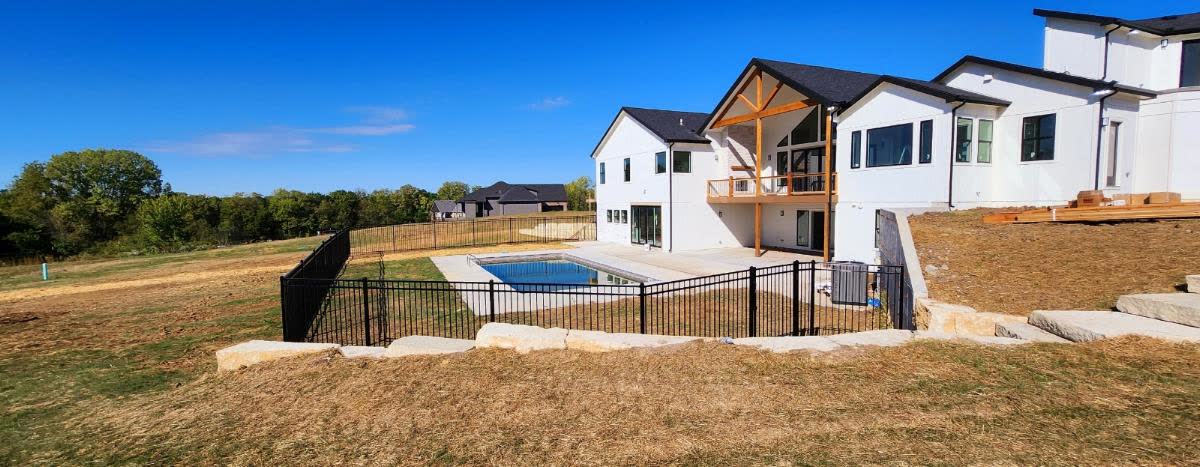
Pool-code aluminum fence blending into the landscape around an Olathe, KS backyard pool

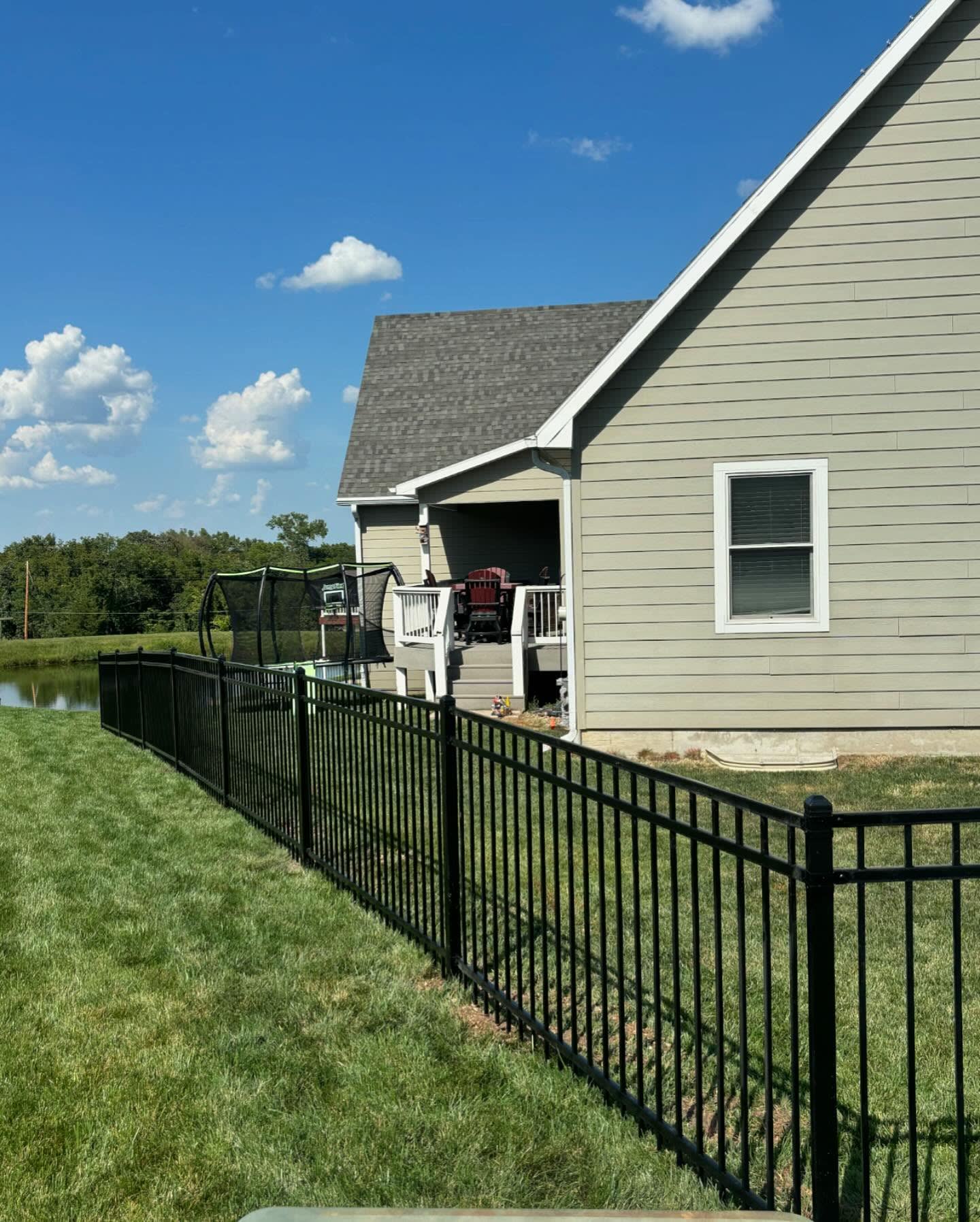
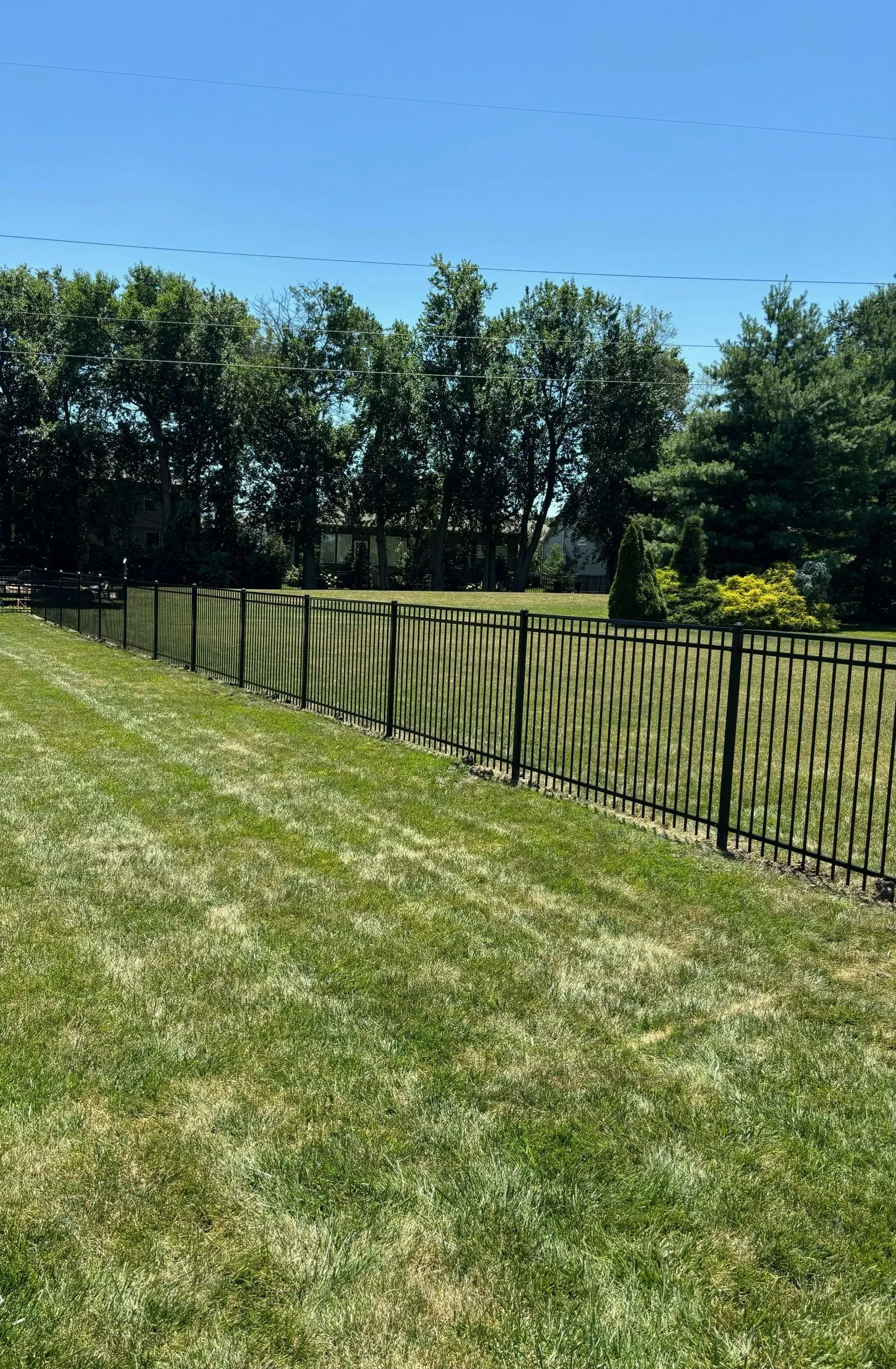
A pool fence that disappears into the landscape

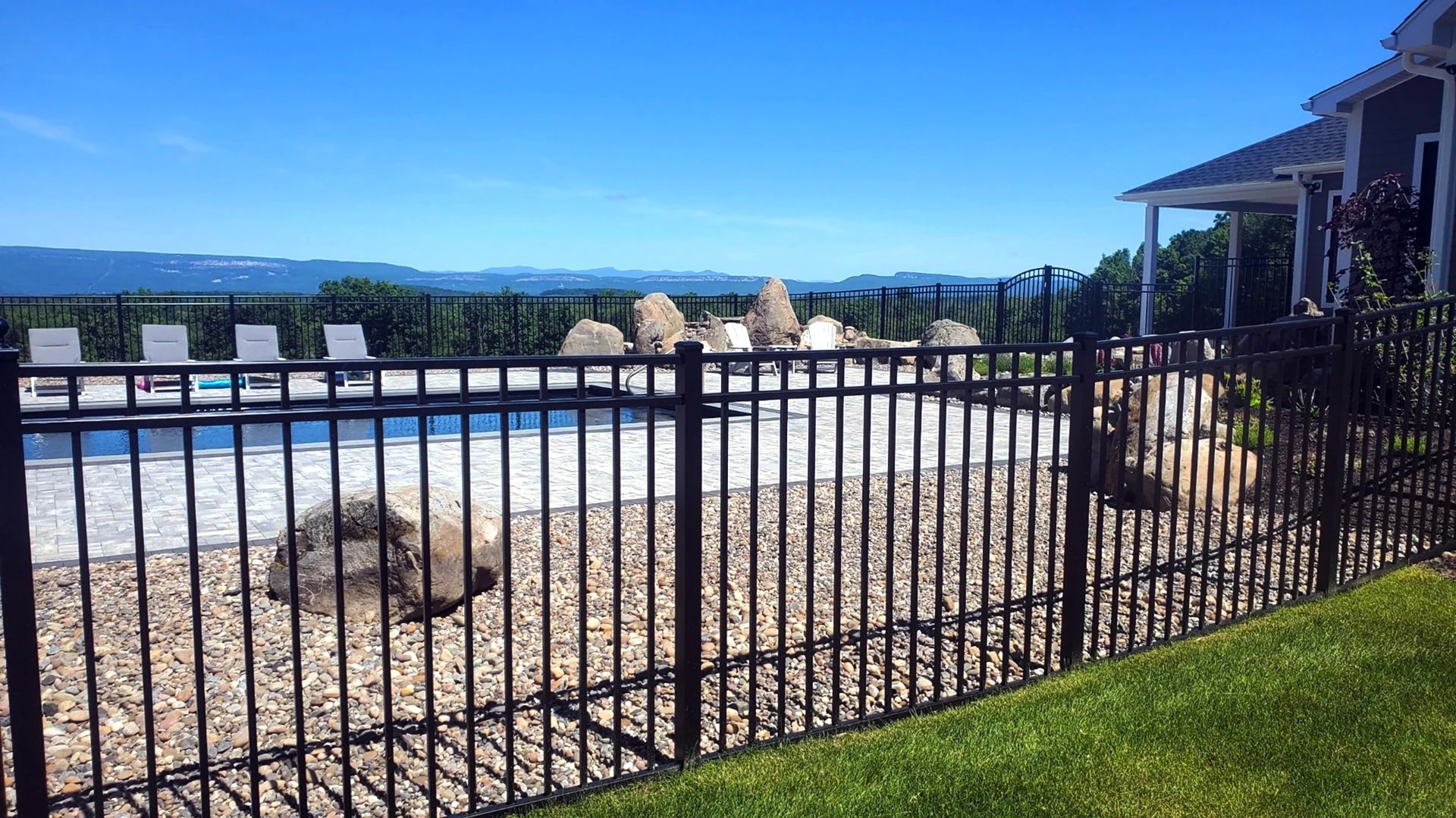
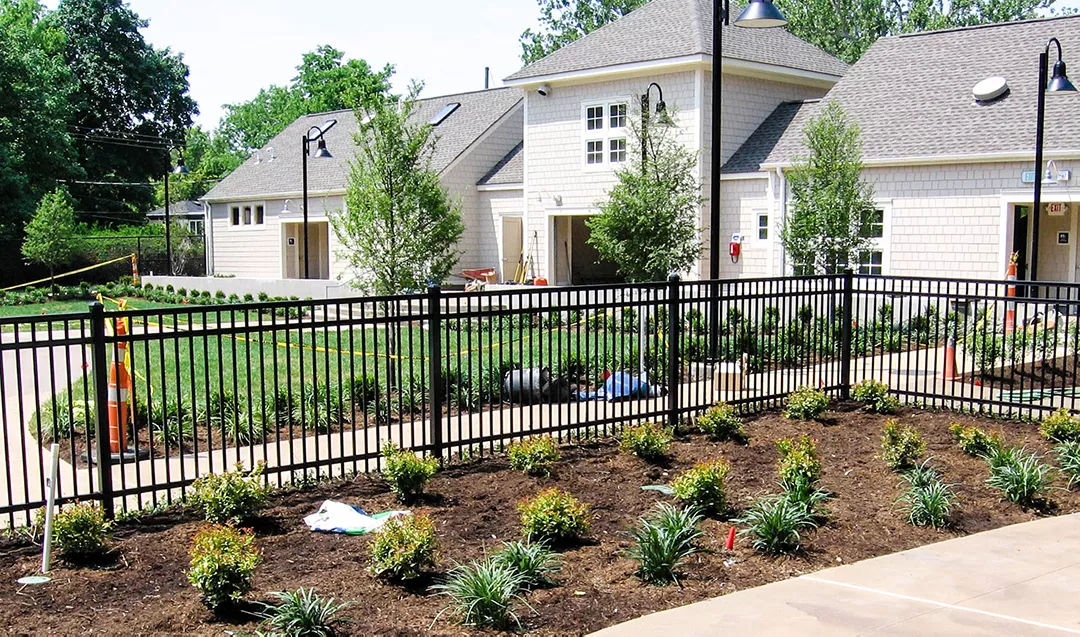
Black flat-top aluminum reads as a vertical line against grass, hedges, and pool decking — not as a barrier. You still see the water from the kitchen window, the patio view stays open, and the fence does its job without dominating the backyard.

Powder-coated pool fence still rust-free after years of chlorine and KC sun

Chlorine and sun without rust streaks at year three

Pool-deck splashback is chlorinated water on a powder-coat finish, day after day. E-coated aluminum pickets with a baked powder-coat topcoat shrug off the chemistry — no rust bleed at the welds, no chalking at the top rail, no repainting in year four.

Pool inspector walking a code-compliant aluminum pool fence in Lee's Summit, MO

First-pass inspection — no callback, no rework

Inspectors test the 4-inch sphere at the pickets and the ground, check latch height, and watch the gate close on its own. We spec every panel to those exact rules before the fabric ships, so the inspector walks the line once, signs off, and the pool opens on schedule.

POOL FENCE CATALOG

Pool-Code Panels — What Passes Inspection the First Time

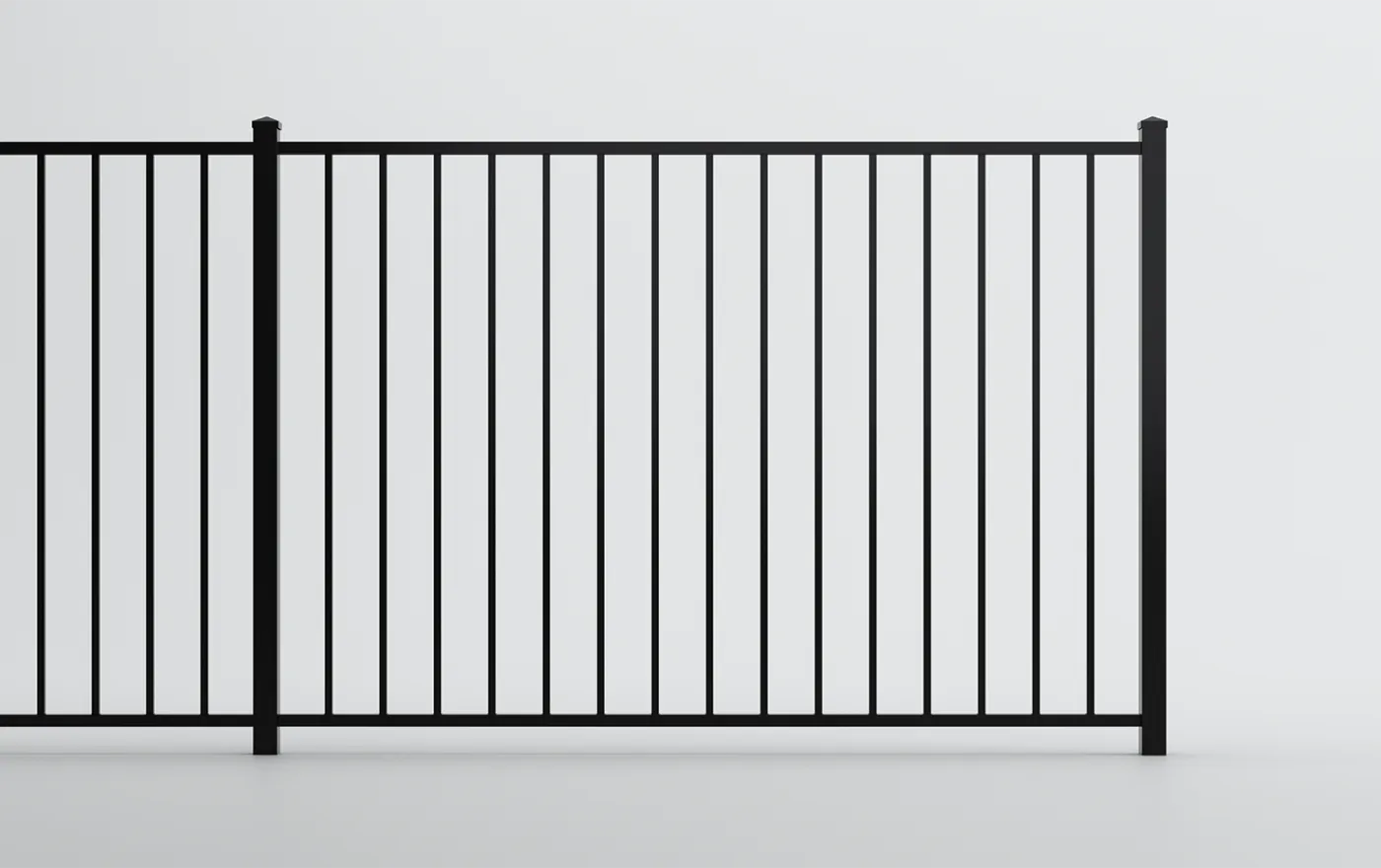
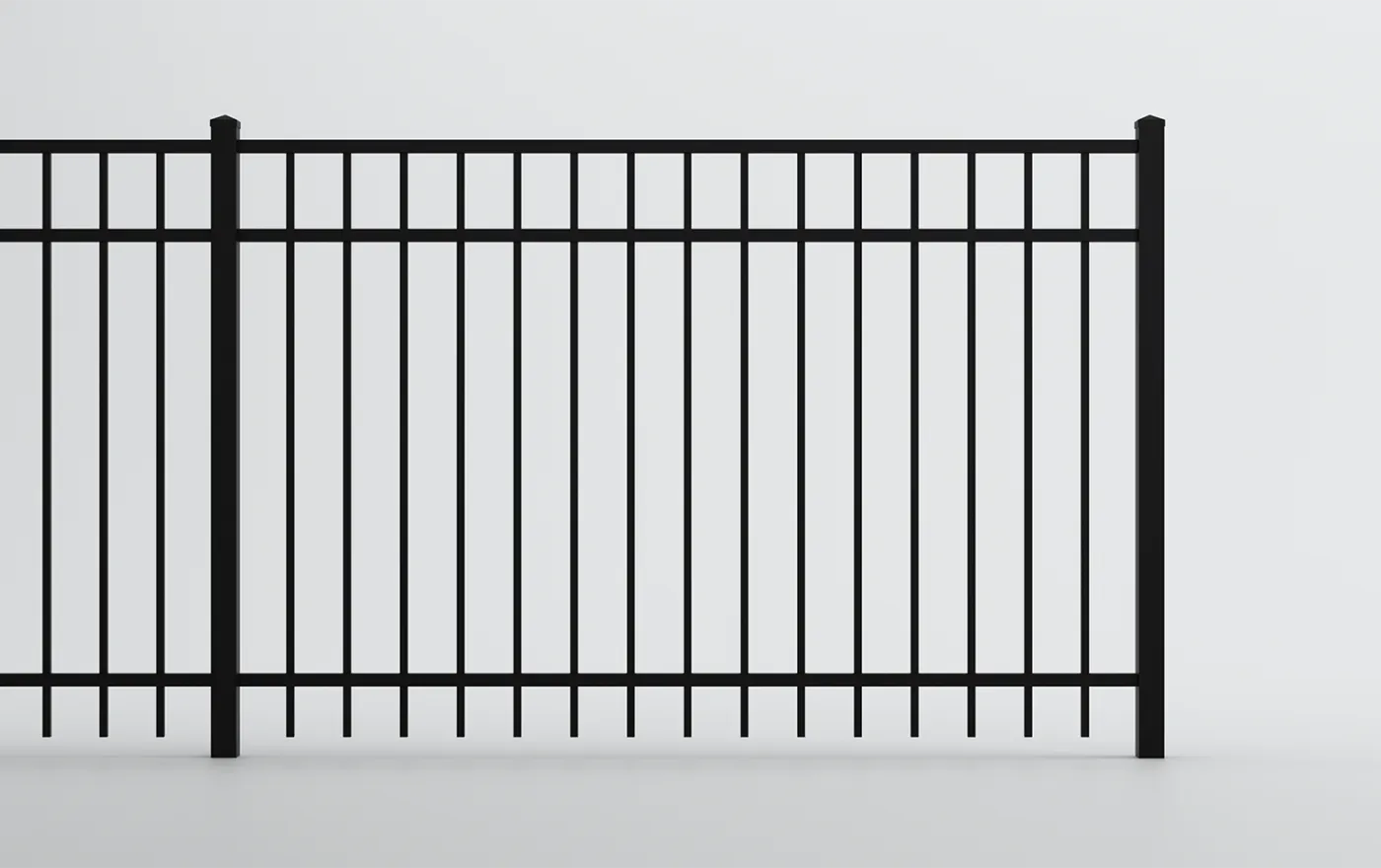
Flat-top aluminum is the dominant pool-code fence profile across the KC metro — smooth vertical pickets with no footholds, factory powder-coat finish rated for chlorine and saltwater pool exposure, available in code-compliant 48-inch and 54-inch heights. Browse the pool-compatible ornamental catalog below: aluminum options from Catalyst and Ameristar, all code-compliant profiles identified. For vinyl, mesh, and wood pool-fence specs, ask at the estimate.

Select a style above to see colors and details

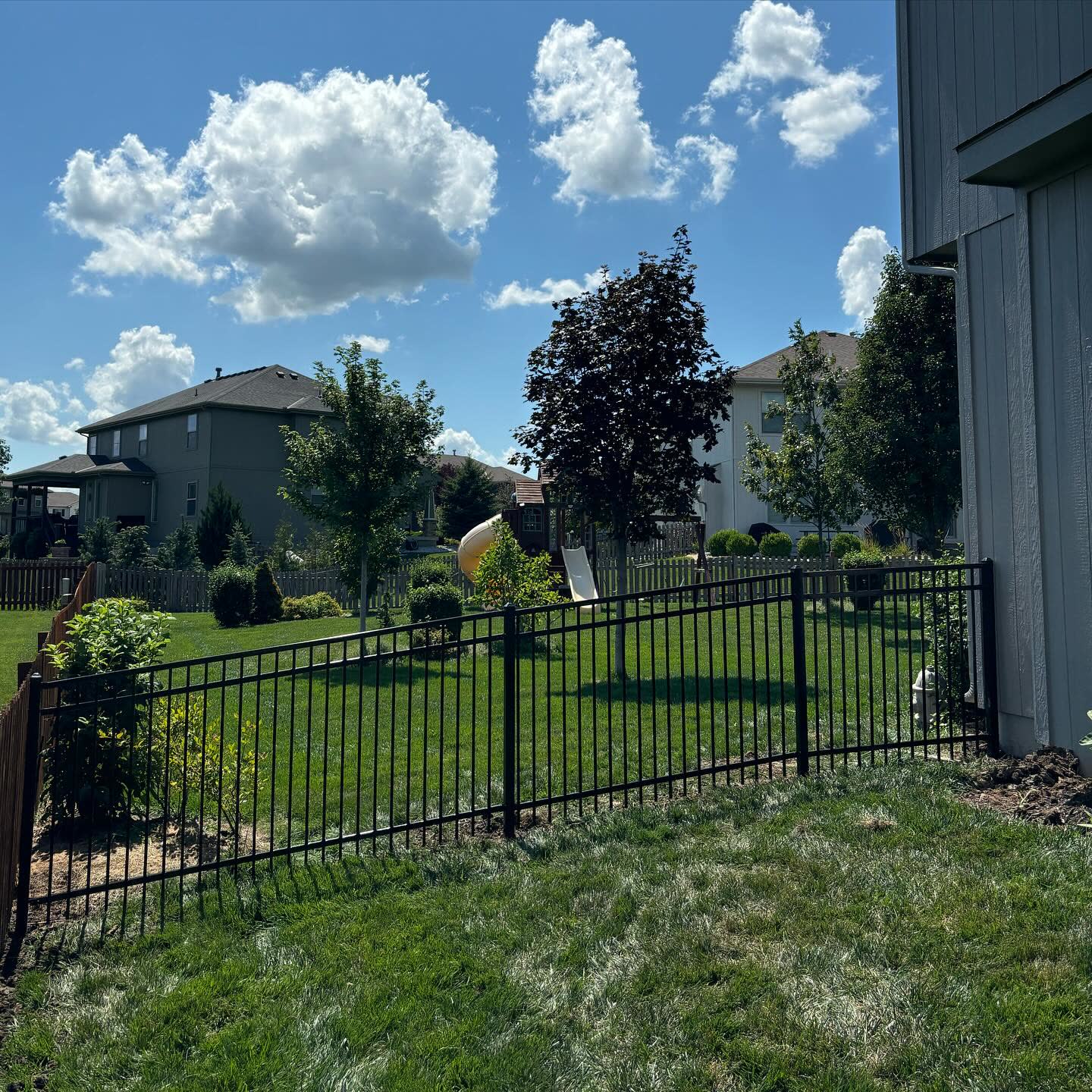
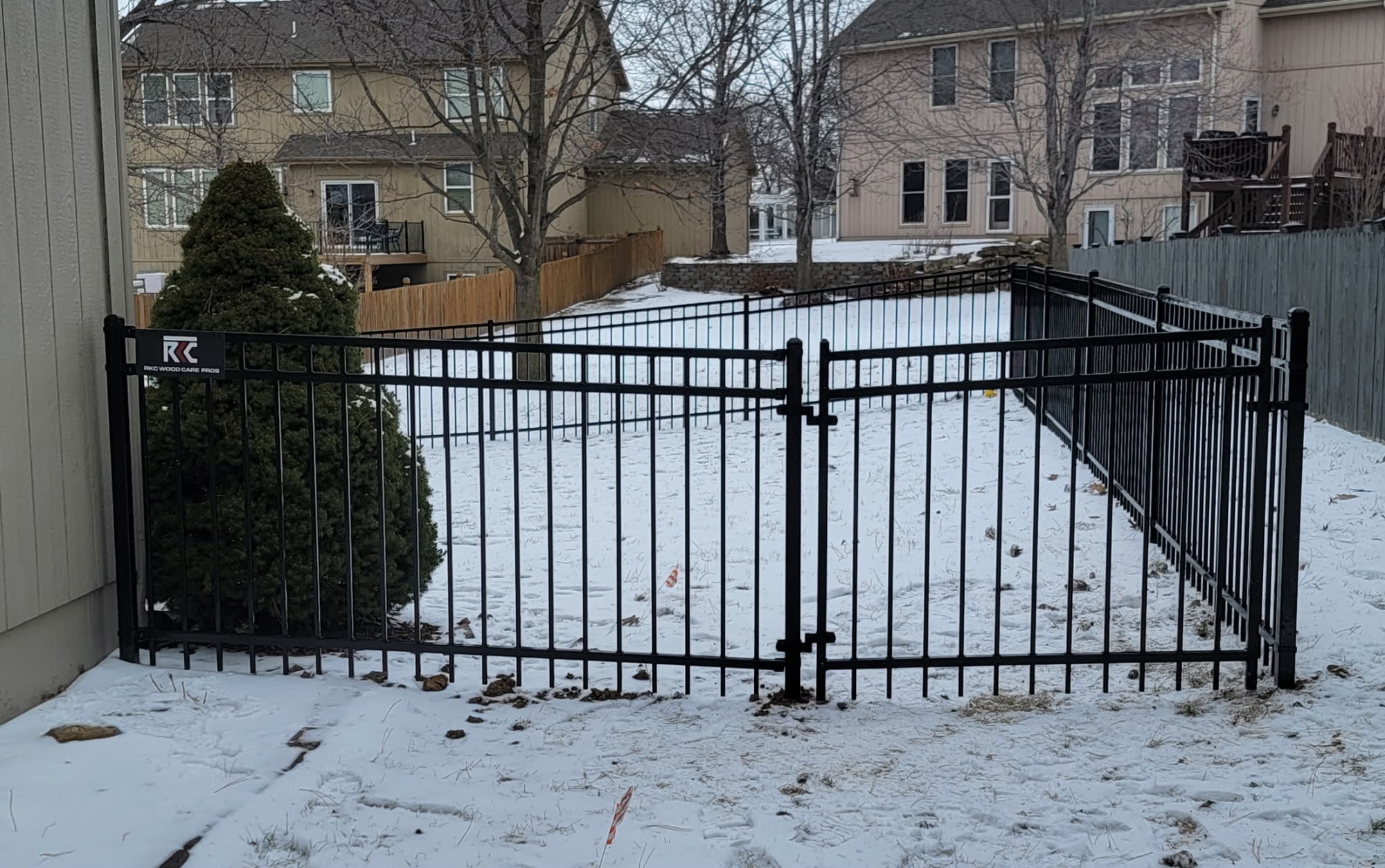
Pool-code compliant aluminum fence with self-closing gate installed by RKC Wood Care Pros in the Kansas City metro

POOL-CODE DETAILS THAT TRIP UP FIRST INSPECTIONS

The Pool-Code Details Homeowners Usually Hear About From the Inspector

A failed pool-fence inspection usually costs 2–3 weeks of re-work and can delay opening the pool for summer. Most homeowners don't know that the 4-inch maximum spacing rule applies between pickets AND between the ground and the bottom rail. Most don't know the latch height. Most don't know horizontal rails above 45 inches get red-tagged. We measure twice and spec once.

  1. 1.
    Bottom clearance over 4 inches. The 4-inch sphere rule applies between the bottom rail and the ground — every foot of the fence line. On sloped yards, crews sometimes hang standard panels and leave 6–8-inch gaps at the low points, which fails inspection. We flush-bottom panels or add bottom-rail fillers to hold 4 inches everywhere.
  2. 2.
    Latch at 42 inches, not 54. Standard residential gate latches are installed at ~42 inches, the same height as a deadbolt. Pool-code latches must be at 54+ inches on the outside — or magnetic on the pool side. Crews unfamiliar with pool code sometimes install standard latches, and the inspector red-tags every gate.
  3. 3.
    Spear-top or staggered pickets specced for curb appeal. Homeowners pick a picket style for looks. Spear-tops create toe-holds at the point. Staggered pickets are climbable. Scalloped tops are often climbable too. Flat-top is the standard pool-code profile, and it's the default we spec for every pool install unless the city code explicitly allows another profile.
See our six pool fence installation standards →

INSTALLATION STANDARDS

The Six Standards That Make an RKC Pool Fence Pass the First Inspection

Every pool fence RKC installs follows the same six standards — aluminum, vinyl, or retrofit hardware. These aren't upsells. They're the pool code. If a contractor skips any of them, the install fails inspection and the pool can't legally open.

RKC Wood Care Pros crew installing pool-code aluminum fence with self-closing gate and 36-inch post depth
Every pool-fence post set 36 inches deep in poured concrete — every gate self-closing, self-latching, with the latch at 54+ inches.
  1. 1

    Minimum 48-inch height — verified before the panel order ships

    Every KC metro city requires at least 48 inches from ground to top rail for residential pool enclosures (some cities require 54 or 60). We verify the exact height requirement with your city before panels are ordered, so your fence doesn't get red-tagged on inspection day.

  2. 2

    4-inch maximum picket spacing — pickets AND ground clearance

    The 4-inch sphere rule applies in two places every homeowner misses: between pickets AND between the bottom rail and the ground. If either spacing exceeds 4 inches, the inspector fails the install. We install flush-bottom panels or add a ground-level bottom-rail filler on uneven terrain to hold the 4-inch max.

  3. 3

    Self-closing, self-latching gate — latch at 54+ inches

    Pool gates must swing closed on their own and latch on their own. The latch release must be 54 inches above ground on the outside of the gate, or on the pool side of a gate using a magnetic latch. We typically use hydraulic self-closing hinges plus magnetic self-latches — smoother action, more reliable, code-compliant.

  4. 4

    No-toe-hold vertical pickets, no climbable horizontal rails

    Horizontal rails above 45 inches create toe-holds kids can climb. Pool-compliant fences use smooth vertical pickets with only a top rail and a bottom rail — no mid-rails, no ornamental ladder. Spear-tops and staggered pickets are typically rejected for the same reason. We stick to flat-top aluminum or smooth-top vinyl for pool code.

  5. 5

    36 inches post depth, concrete to the frost line

    Every pool-fence post goes 36 inches deep in poured concrete — below the KC frost line. Post stability matters even more for pool fences because a leaning picket opens the 4-inch spacing past code. Bell-bottom footings, wet-pour concrete, and 24–48 hour cure before the panels hang.

  6. 6

    Final inspection walkthrough — we stay until sign-off

    We coordinate the city pool-fence inspection and stay on-site for the walkthrough. Inspector tests gate closure, latch height, picket spacing (sometimes with the actual 4-inch test sphere), and ground clearance. You don't pay the final balance until the install is code-signed.

RKC installs and repairs every type of fence — wood, vinyl, chain link, ornamental iron, aluminum, and commercial security — plus gates, automatic openers, and in-house staining. The six standards above apply to every pool fence we install; material-specific standards apply to the rest.

POOL FENCE MATERIAL COMPARISON

Which Pool Fence Material — Compliance-First, Aesthetics Second

All four materials can meet pool code. They differ on compliance detail, lifespan, and fit. Here's the side-by-side on the four common pool-fence materials across KC — with code-compliance columns dominating every decision factor.

Factor Aluminum Pool-Code Vinyl Pool-Code Mesh Pool Safety Wood (with compliant hardware)
Material Aluminum ornamental Vinyl privacy/picket Removable mesh Wood privacy
Permanent or temporary Permanent Permanent Temporary Permanent
Typical pool-code height 48–60 in 48–60 in 48–54 in 48–60 in
4-in max spacing compliance Yes — flat-top spec Yes — tongue-groove Yes — tight mesh weave Yes — dog-ear or flat-top
Self-latch compatible Yes — magnetic std Yes — hydraulic hinge Yes — latch on pole Yes — with proper hardware
Installed cost per LF $32–$60 $32–$45 $15–$28 $28–$40
Expected lifespan (KC) 20–30+ years 25–30+ years 10–15 years 15–25 years
Best fit Permanent HOA pool Low-maintenance pool Rental / during-season Wood-themed property
Try the Cost Estimator →

WHAT POOL FENCE CUSTOMERS SAY

Reviews from KC Homeowners Who Needed RKC to Pass Pool-Code Inspection

New in-ground pools, existing-fence retrofits, HOA-layered pool code, mesh seasonal installs — the reviews cover every pool-fence scenario we handle. Here are nine customers who needed the fence signed off before the pool opened. Full archive on Google.

★★★★★
“New in-ground pool meant we had 60 days to install a code-compliant fence. RKC pulled the permit, installed flat-top aluminum with a magnetic self-latch, and the Olathe inspector signed off on the first walkthrough. No stress, no re-work.”
Jason M. Olathe, KS
Aluminum Pool Enclosure
★★★★★
“Our existing wood fence failed the pool-fence inspection because the gate wasn't self-closing and the latch was too low. RKC retrofitted hydraulic hinges and a magnetic latch for under $400 and the inspector passed it the next day.”
Amanda R. Overland Park, KS
Gate Hardware Retrofit
★★★★★
“Went with vinyl pool fence because I didn't want another thing to paint. RKC installed tongue-and-groove vinyl with aluminum inserts in the rails, self-closing gate, and a magnetic latch on the pool side. Two years in and it still looks like day one.”
Kelly F. Leawood, KS
Vinyl Pool-Code
★★★★★
“We added the pool, needed the fence, and time was tight. RKC turned the estimate into an install in under three weeks. 48-inch aluminum, spec'd to the KCMO pool code, passed the CompassKC inspection the first time. Exactly what we hoped for.”
Derek C. Kansas City, MO
Pool-Code Aluminum KCMO
★★★★★
“Inspector pointed out the old chain link had gaps under the bottom rail that failed pool code. RKC tore it out, re-installed at proper height with a 4-inch bottom clearance, and scheduled the re-inspection. Second try, compliant.”
Monica S. Lee's Summit, MO
Chain Link Replacement for Pool
★★★★★
“Three quotes, only RKC asked about the specific pool-code requirements in our city. The others quoted a generic height. Ended up with code-compliant aluminum and a self-latching gate that works smoothly every single time we use it.”
Patrick T. Mission, KS
Pool-Code Aluminum
★★★★★
“Our HOA required a specific color and style for the pool fence. RKC pre-cleared it with the architectural review board, ordered the exact spec, and installed — HOA approved, pool-code compliant, inspector signed. Three compliance layers, handled.”
Rebecca N. Prairie Village, KS
HOA + Pool Code
★★★★★
“Mesh pool fence for the summer rental. RKC installed it with tight-mesh weave panels and a latch-on-pole that meets code. Easy to remove off-season. Professional install, clean finish, pool-compliant.”
Greg B. Independence, MO
Mesh Pool Fence
★★★★★
“We had a cedar privacy fence in the backyard and just needed the pool area separately enclosed. RKC installed flat-top aluminum inside the existing yard — tight spacing, self-latch, 36-inch post depth. Inspection signed, pool open for summer.”
Heather L. Shawnee, KS
Secondary Pool Enclosure

Read all 77+ reviews on Google →

POOL FENCE PRICING

What Pool Fence Installation Costs in Kansas City

Typical installed prices across the KC metro — code-compliant panels, 36-inch post depth, self-closing self-latching gate, permits, and pool-fence inspection coordination included. Prices assume standard terrain and stock color. Retrofit gate hardware is quoted per gate. Use the cost estimator, or call for a free on-site estimate with pool-code review.

MOST POPULAR

Aluminum Pool-Code 4 ft

$32–$48 / LF installed

Included: Flat-top aluminum, welded panels, 36" post depth, self-closing self-latching gate, permits, pool inspection coordination

Changes price: Color upgrade, panel style, gate count, extra-long runs

TALL POOL

Aluminum Pool-Code 6 ft

$40–$60 / LF installed

Included: Flat-top aluminum, 6-foot panels, heavy-duty hinges, self-latching, permits, inspection coordination

Changes price: Color, gate count, site access challenges

LOW MAINTENANCE

Vinyl Pool-Code Approved

$32–$45 / LF installed

Included: UV-stabilized vinyl, tongue-and-groove panels, aluminum reinforcement, pool-code hinges and latch, permits

Changes price: Color (white, tan, khaki), height, textured finish

RETROFIT

Self-Closing Gate Hardware Upgrade

$150–$400 / gate

Included: Upgrade or replace existing gate with hydraulic self-closing hinges + magnetic self-latch, to meet current pool code

Changes price: Gate width, material, code-specific upgrades (alarm, interlock)

Try the Cost Estimator →

HOW IT WORKS

From First Call to Pool-Code-Signed Fence in 2–4 Weeks

Most pool-fence installs finish in 2–4 weeks including permit turnaround, panel lead time, install, and inspection. Retrofit gate-hardware upgrades often finish in a single visit. Plan for the full lead time if the fence must be signed off before pool-fill.

  1. 1

    Call or Request a Quote

    Call (913) 286-1091 or fill out the form. We discuss pool location, code requirements for your specific city, and whether this is a new install or an existing-fence retrofit. Same business day response.

  2. 2

    On-Site Measure + Code Review

    We walk the property, confirm pool-fence code for your city (Olathe, Overland Park, KCMO all have slightly different specs), measure gate locations and grade, and spec panels to hit the 48-inch height, 4-inch spacing, and self-closing gate requirements. Written estimate within 3–5 business days.

  3. 3

    Permit, 811 Locate, Panels Ordered

    We pull the pool-fence permit, schedule the 811 utility locate, and order panels direct from the mill — stock colors typically ship in 1–3 weeks, and install starts once panels and permits are both in hand.

  4. 4

    Install, City Inspection, Walkthrough

    Posts go 36 inches deep and cure 24–48 hours before panels hang, gates set, and self-closing hinges get tuned to the right closing speed. We schedule the city inspector and stay on-site for the pool-fence compliance walk — you pay the final balance only after the inspector signs off.

OUR SERVICE AREA

Which KC Metro Cities Require a Pool-Code Fence Inspection?

We install pool fences in 56 KC metro cities — each with its own variation of the pool-fence code. From Johnson County suburbs with HOA overlays to KCMO's CompassKC pool-fence inspections, we know the specific requirements in every city we work.

Kansas

Johnson County is home base for pool-code installs — most cities follow the same core spec with minor height variances. Bonner Springs , Gardner , Leawood , Lenexa , Mission , Olathe , Overland Park , Prairie Village , Shawnee , Spring Hill . We handle permit applications, 811 utility locates, pool-fence inspections, and HOA architectural review in every city.

Missouri

Pool-fence code on the MO side varies — KCMO runs CompassKC inspections, outer suburbs have their own variants. Belton , Blue Springs , Grain Valley , Grandview , Greenwood , Independence , Kansas City , Lee's Summit , Liberty , Oak Grove , Peculiar , Pleasant Hill , Raymore , Smithville . We handle KCMO's CompassKC portal and pool-code inspection across Jackson, Clay, and Platte counties.

POOL FENCE QUESTIONS

Every Pool Fence Question KC Homeowners Ask — Answered Straight

Common pool-code questions we get most often on estimates. If yours isn't here, call (913) 286-1091.

Finished pool-code aluminum fence with self-latching gate by RKC Wood Care Pros in the Kansas City metro

Pool Code Specifics

What's the minimum pool fence height in the Kansas City metro?
48 inches is the baseline across every KC metro city, measured from the ground (not from any toe-hold) to the top of the fence. Some cities require 54 or 60 inches — Olathe, Overland Park, and KCMO all follow slightly different versions of the International Swimming Pool and Spa Code. We verify the exact requirement for your address before panels are ordered.
How tight does the picket spacing need to be?
A 4-inch sphere must not pass through any opening — between pickets, between the bottom rail and the ground, or between the top rail and any decorative top element. That 4-inch rule applies everywhere. On sloped terrain, this usually means adding a flush-bottom panel or a ground-level filler strip so the bottom clearance stays under 4 inches along the entire run.
What counts as a toe-hold or climbable surface?
Any horizontal rail, decoration, or surface above 45 inches and wider than 1 inch creates a toe-hold by code. That's why most spear-top, scalloped, and staggered-picket ornamental fences fail pool inspection — the decorative elements above 45 inches give a kid a foothold. Flat-top panels with only a top rail and a bottom rail (no mid-rails) are the standard pool-compliant design.
Does my pool area need to be alarmed if I have a gate?
Some KC metro cities require a pool alarm or a gate alarm as part of the pool code; some don't. Johnson County cities generally don't require alarms if the self-closing self-latching gate meets spec. KCMO and some MO-side jurisdictions may require a gate-mounted alarm. We check your city's requirement during the estimate.

Materials & Compatibility

What's the best material for a pool fence in Kansas City?
Aluminum ornamental is our most installed pool fence — powder-coated, corrosion-proof (pool chemicals and chlorine won't touch it), 20–30+ year lifespan, and naturally compliant with the flat-top no-toe-hold requirement. Vinyl is the low-maintenance alternative for homeowners who want a privacy pool fence. Wood works but requires specific gate hardware to stay compliant. Mesh is a removable option for seasonal pools or rentals.
Can I use a wood privacy fence as my pool fence?
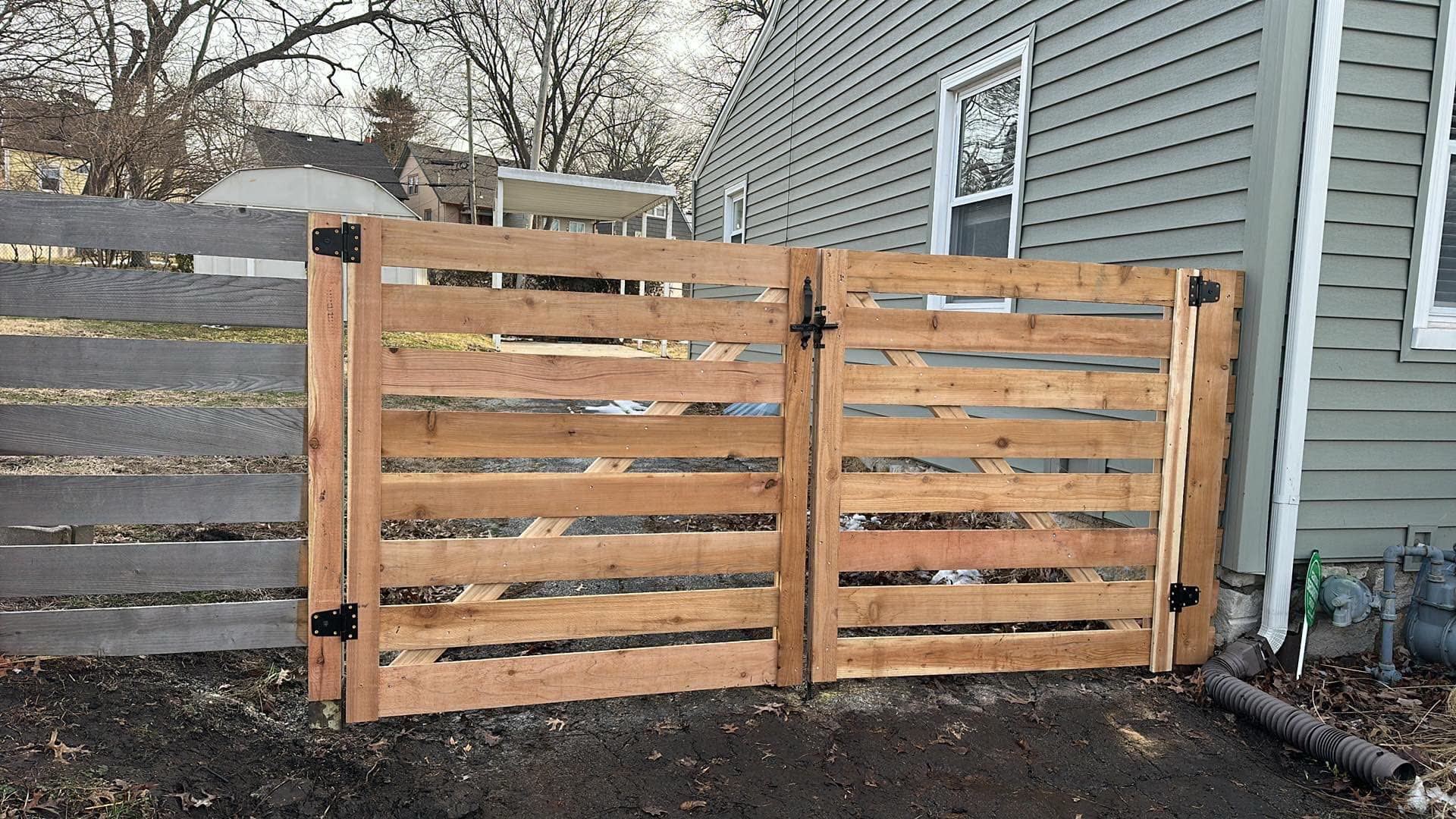
Yes, with the right hardware. A 48-inch (minimum) wood privacy fence can meet pool code if: (1) the gate has hydraulic self-closing hinges, (2) the gate has a self-latching mechanism with the latch at 54+ inches (or magnetic on the pool side), and (3) the bottom clearance is under 4 inches. Wood fencing is not typically specced for new pool enclosures in HOA neighborhoods because ornamental aluminum is cleaner-looking and lower-maintenance, but a properly-specced wood fence is fully compliant.
Does chain link meet pool code?
Yes, 9-gauge galvanized or vinyl-coated chain link with 2-inch mesh meets the 4-inch sphere rule when stretched tight and installed to proper height. The gate must be self-closing and self-latching with the latch at 54+ inches, and the bottom edge must be anchored or buried to maintain under 4 inches of ground clearance. Black vinyl-coated chain link is the most common pool-compatible chain link choice for HOA properties.
What if my existing fence is almost code-compliant but fails on the gate?
Gate hardware retrofit is the most common pool-code upgrade we do. Installing hydraulic self-closing hinges plus a magnetic self-latch on an existing gate runs $150–$400 depending on gate size and material. That one upgrade often turns a failing fence into a code-compliant pool enclosure without replacing any panels. We can evaluate during an on-site estimate.

Gate & Latch Requirements

Does the gate really have to close and latch on its own?
Yes. The pool code requires self-closing AND self-latching gates — both. Self-closing means hydraulic hinges pull the gate shut on its own every time. Self-latching means the latch engages automatically when the gate closes; no second manual step. Both are code. We install matched hinge-and-latch kits, not mixed hardware, for reliability.
Where does the latch need to be?
54 inches above the ground, measured to the release mechanism, on the OUTSIDE of the gate — so a small child can't reach it. Alternative: a magnetic self-latch can be mounted on the POOL SIDE of the gate (since a child outside the pool area can't reach it). We use the magnetic-on-pool-side configuration on most installs — smoother, more reliable, and the outside latch height doesn't restrict gate style choice.
Can I have multiple gates on the pool enclosure?
Yes, as many as you need — as long as every gate meets the self-closing, self-latching, 54-inch latch rules. Most backyards have one gate for access from the house and one for the yard or driveway. Both gates get identical code-compliant hardware. We spec every gate to pass inspection, not just the 'main' gate.
Can a sliding gate work for a pool fence?
Yes, a sliding gate can be pool-code compliant if it self-closes, self-latches, and meets the 4-inch gap rules when closed. Sliding gates are less common on residential pool enclosures (typical for driveways, not pool areas) but for larger estates with a pool pavilion, we install both sliding and swing combinations that pass code.

Inspection Process

How does the pool-fence inspection work in the KC metro?
Once the permit is pulled, install is completed, and the self-latching gate is functional, we schedule the city inspector. The inspector visits, tests the gate (actual push-to-close, verify self-latch), checks picket spacing (sometimes with a 4-inch test sphere), measures height at several points, confirms no toe-holds, and signs off. Typically 15–30 minutes on-site. If anything fails, we correct it and re-schedule.
How long after pool install do I have to get the fence up?
Most KC metro cities require the pool fence be in place AND inspected before the pool is filled with water or put into use — the pool permit is often contingent on the fence permit. Some cities give 60–90 day windows after pool construction. We recommend scheduling the fence install to finish 1–2 weeks before the pool fills, so the inspection is done and you're clear for summer.
What happens if my fence fails the pool inspection?
The inspector red-tags the specific issues — most common are latch height too low, picket spacing too wide, gate not self-closing, and bottom clearance over 4 inches. We correct every flagged item and re-schedule the inspection, usually within a few days. That said, the reason we spec panels to the exact code before ordering is so the first walkthrough is the last one.
Can RKC handle the entire permit and inspection process?
Yes — permit application, pool-fence spec submission, 811 utility locate scheduling, and inspection coordination are all included in every pool-fence install we write. You don't call the city, fill out forms, or book the inspector. We do it. You just need to be home for the inspection (or have access arranged) so the inspector can get in the yard.

Ready when you are

Get a free estimate — we usually respond the same day.

Call (913) 286-1091