
Raytown, MO ·
Cedar Pergola Stain — Raytown, MO
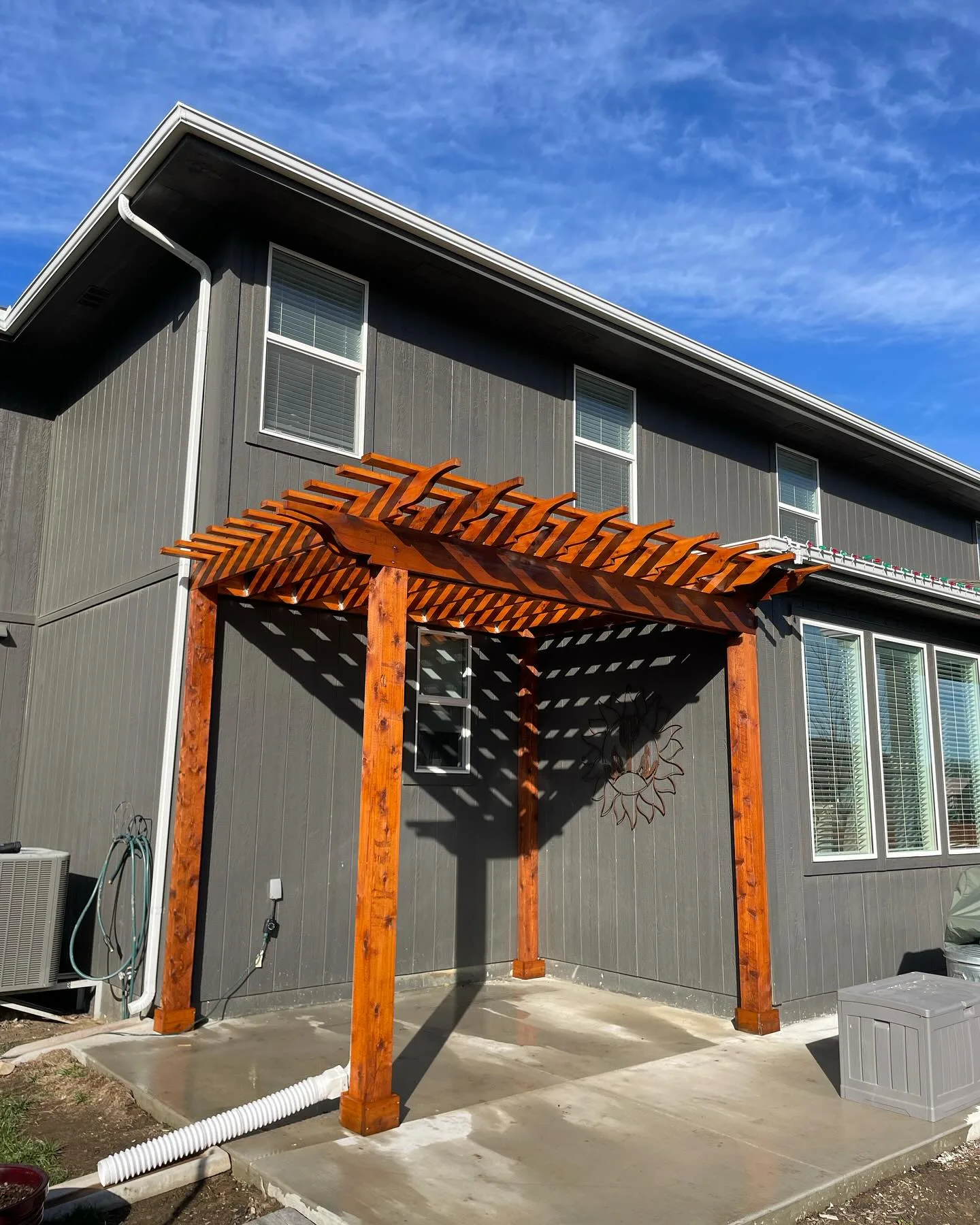
Staining the Raytown pergola
We pressure-washed the entire pergola structure, let it dry to acceptable moisture content, then applied a semi-transparent penetrating oil-based stain to all surfaces — posts, beams, cross-rafters, and the decorative end cuts. The spray-and-back-brush method ensures complete penetration at notches and joints where checking tends to start.
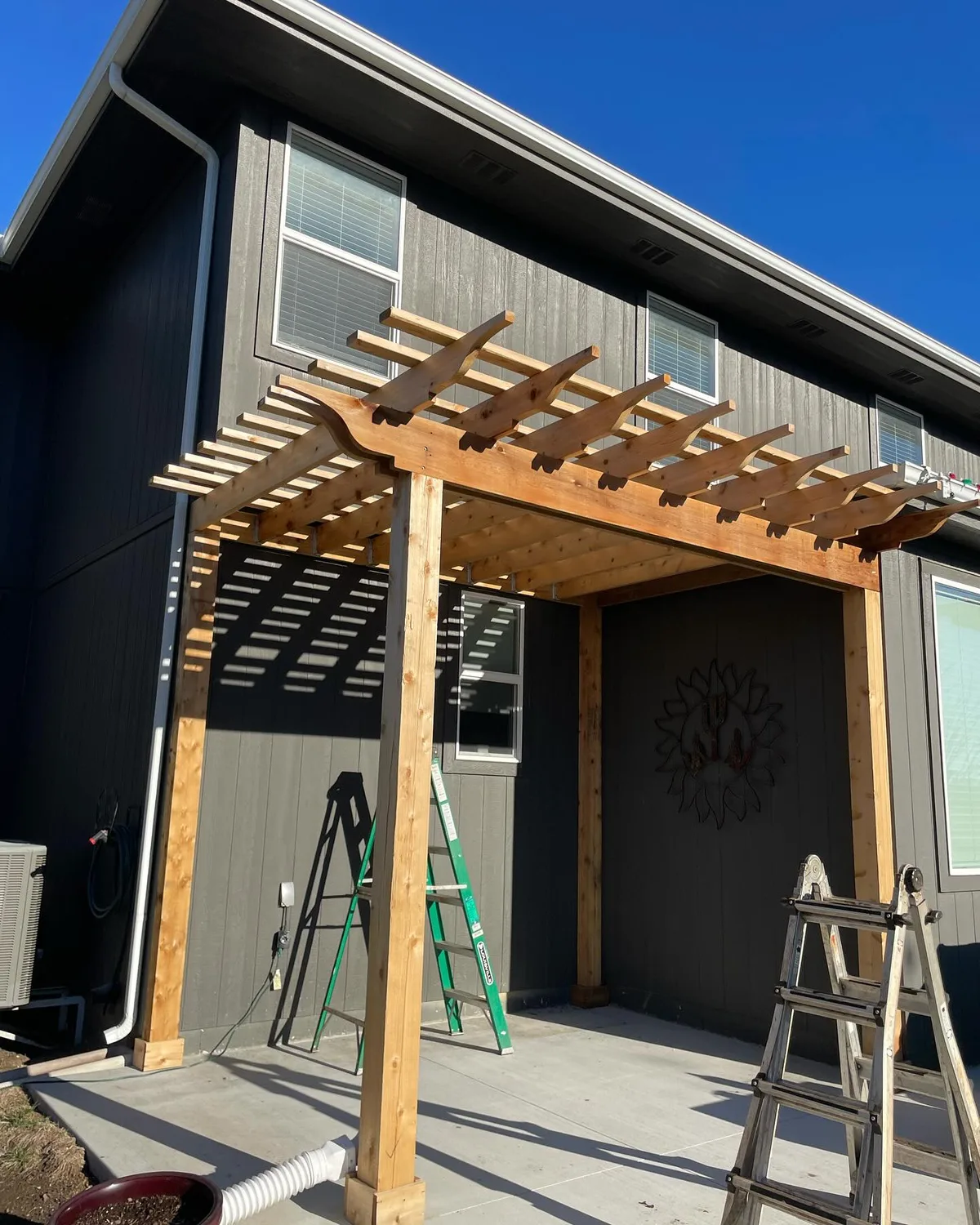
The cedar pergola had never been stained since it was built three years prior — the wood was starting to gray and check at the beam ends, which was the right time to catch it before deeper cracking set in. Freestanding cedar structures like pergolas collect more UV exposure than fence boards because the tops are fully exposed to direct sun with no shade cover at all.
Pergola staining in KC's climate
Raytown gets the same intense summer UV load as the rest of the metro, plus the pergola's open overhead construction means no shade buffer on the top surfaces. Oil-based penetrating stain protects end grain at notches — the spots that crack first in freeze-thaw cycles. This is the same technique we use for exterior wood staining on fences: penetrate the wood rather than coating it so the protection doesn't peel.
Three years of gray reversed
The amber tone came back fully with two coats. Beam-end checking stopped at existing depth and won't progress now that the wood is sealed. We set the re-coat reminder at two years for this structure. Same approach applies when any adjacent wood fence comes due for its stain cycle.
Thinking about a fence install or staining project in the KC metro? Get a free estimate or call (913) 286-1091.